

here continues with the basic types of transistor ignition systems (breaker-point and magnetic-pulse), the capacitor discharge ignition system, the Chrysler electronic ignition system, the Delco-Remy unitized ignition system, and the Ford computerized ignition system.
The breaker-point type of transistor ignition system was developed to replace the standard or conventional ignition system. To obtain the maximum power and speed that this engine can produce, you must install an ignition system that outperforms the conventional one. Electronic type of ignition systems provide a hotter, more uniform spark at a more precise interval. This promotes more efficient burning of the air/fuel mixture in the combustion chamber, producing less exhaust emissions, and resulting in better engine performance and increased mileage. The increased reliability of electronic ignition allows less frequent maintenance by increasing parts life. At high speeds, the breaker points of a conventional ignition system cannot handle the increased current flowing across them without pitting too much. Also, the dwell angle of the breaker points is too small for complete saturation of the ignition coil. The transistorized ignition system takes care of both drawbacks.
By comparing figures 4-28 and 4-29, you can see how the transistor ignition system differs from the conventional. When the breaker points are connected to the transistor, as shown in figure 4-29, it nearly eliminates arcing across them since the current flow is small (about one-half ampere). However, the current flow in the primary windings of the coil is about 6 amperes. This amount is enough to saturate the coil completely at high engine speeds, and results in a higher output to the secondary circuit. Therefore, the transistor ignition system is superior to the conventional system at high engine speeds because there is less arcing across

Figure 4-28.-Conventional ignition system.
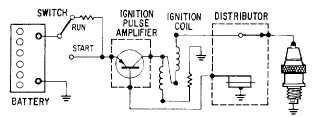
Figure 4-29.-Transistor ignition system (breaker-point type).
the breaker points and higher and steadier voltage in the secondary circuit.
TRANSISTOR IGNITION SYSTEM (MAGNETIC-PULSE TYPE)
The drawbacks of a conventional ignition system operating at high engine speeds can also be overcome with the magnetic-pulse type of transistor ignition system (fig. 4-30). Notice that a magnetic pulse distributor, which resembles a conventional distributor, is used instead of a breaker-point type of distributor. An iron timer core in this distributor replaces the standard breaker cam. The timer core has equally spaced projections (one for each cylinder of the engine) and rotates inside a magnetic pickup assembly. This pickup assembly replaces the breaker plate assembly of the conventional distributor. Since there are no breaker points and there is no condenser, there can be no arcing across them. Capacitors in this system are for noise suppression. This overcomes one of the drawbacks already mentioned. The other drawback is overcome by controlling the amount of current that flows through the primary windings of the ignition coil and to ground. Transistors in the ignition pulse amplifier do the controlling. Another feature of this transistor ignition system is its coil, which has fewer and heavier primary windings and a higher turns ratio of primary to secondary windings than the conventional coil. Controlling the current flow and using a special coil
Figure 4-30.-Magnetic-pulse type transistor ignition system.
Continue Reading